
We all lead busy lives with plenty we want to accomplish. Yet some days you feel like you’re just going through the motions. You show up for work, finish everything on your list, answer every message and email, and engage with your co-worker. You move through the day like you’re reading lines from a script running on autopilot. When friends, co-workers, family, or your spouse ask, “How are you doing?” you always answer “Fine,” even when that is far from the truth.
Have you ever wondered, “Am I giving a genuine answer, or am I just going through the motions?” Is it numbness, or is it anxiety working overtime? Now notice what happens when the same person greets you at work, at home, or with friends:
· The first time is a reflex.
· The second time is a coincidence.
· The third time is a pattern, and patterns become habits.
If saying “I’m fine” has become your habit – in every conversation, you are living with anxiety, depression, numbness, or burnout. On paper, you’re doing everything right. You earn to support your family, and you receive thanks and appreciation for helping out at home and at work. Yet you feel numb, like a ghost drifting through the day with no pleasure, joy, or desire. So are you really fine, or are you Freaked out, Insecure, Nervous, and Embarrassed?
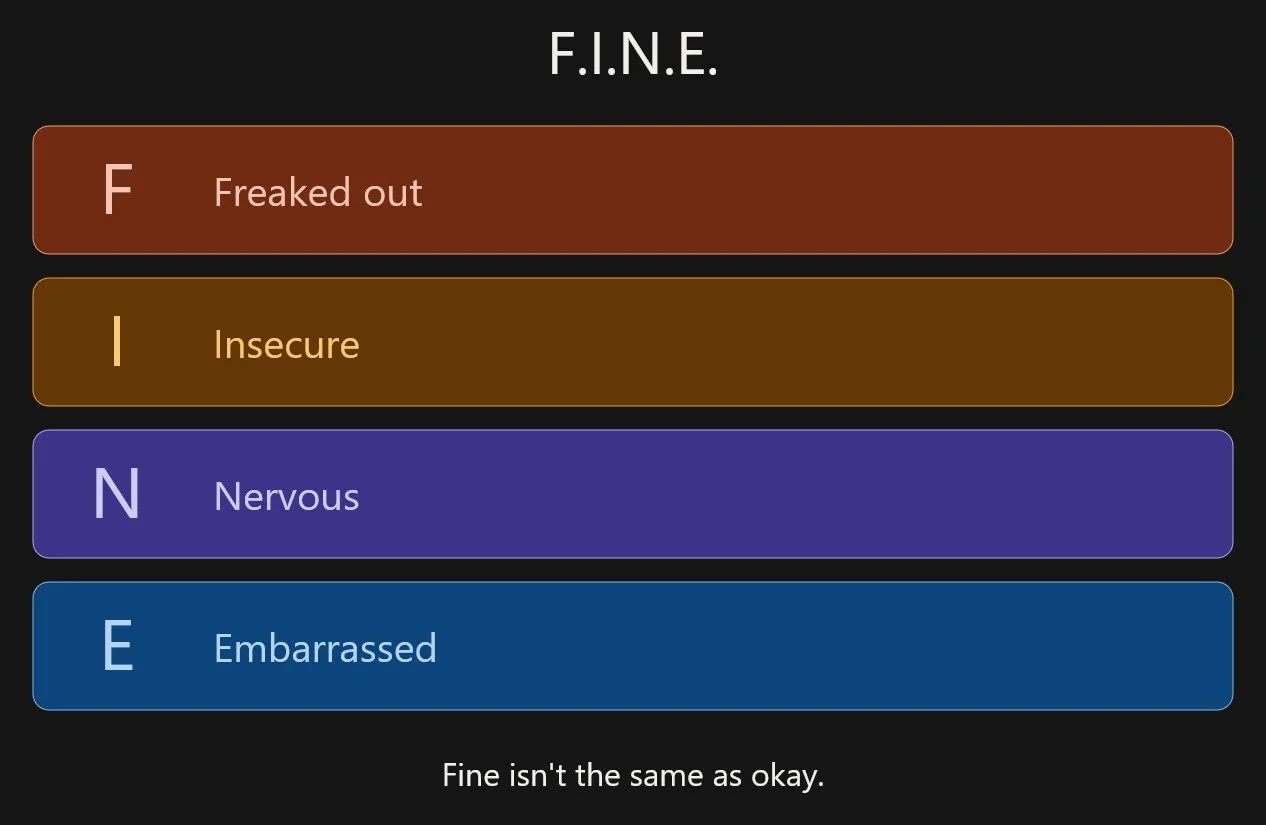
F - Freaked out: you have a ongoing sense of overwhelmed with everything. Everything feels immediate and never relaxed that you don’t feel anxiety but a persistent numbness.
I - Insecure: you have a persistent thought of admitting and just say “I just need to do something to keep myself moving.”
N - Nervous: you life feel likes a house of cards that if you were to stop, even for a second, and all will collapse.
E - Embarrassed: you have a persistent shame about everything in your life and find the mental, physical ways to push these thoughts away.
You may not be aware of the many costs. In therapy, when I talk about cost, I mean the pain we face and move through. Think of buying a candy bar because you’re hungry: you have to pay the vending machine or the store clerk. You may not want to hand over the money, and, sure, you could steal it, but that carries other costs… I wouldn’t encourage. Pain works the same way. Because our nervous systems dislike pain, we want to solve it, and quickly. This pain can show up as a headache, or pressure like the weight of world is no our shoulders, burst of energy where we cannot stop or tense muscles all the time. You make feeling this at times or constantly and typically when you don’t want to feel it.
When you ignore your pain and constantly “push through,” the costs add up. Imagine you broke your leg and kept walking or running on it as if nothing had happened. Would it magically heal just because you kept putting weight on it? Of course not. In fact, new research has found evidence that when we injury ourselves physically our brain sends out signals of pain that limits use of that leg or arm. That is the same for our emotional pain. When it happens, you ignore try to numb the pain or distract ourselves from it. You don’t due this because its not painful, its because there is something more important you are mentally hold. This will lead to small cost costs that show up:
· Neglecting your family
· Struggling to concentrate at work
· Using alcohol or other substances to feel better
· Turning to food for comfort, even when you’re not hungry
· Seeking empty relationships or sexual experiences you would not normally choose
· Picking fights when there is nothing to fight about
· Working more and more while your family feels you’re a ghost
You keep trying to fill the emptiness that the numbness leaves behind, yet it never feels full and you are always numb and always empty. Often, the only alternative though you may have is “playing your part,” like an actor embodying a role as a survival skill. You may even start to believe, “I deserve this pain.” That belief can be a sign of a more serious mental health condition, such as Generalized Anxiety Disorder, Major Depressive Disorder, or PTSD. But if you don’t want this to keep affecting you, don’t worry. There are steps you can take.
Whenever someone sits in front of me in a therapy session describing these exact experiences, I let them know they are normal, but they are not a constant. Your brain dislikes uncertainty and threat, and both can create this experience of anxiety and numbness. The first step is connecting with what really matters. Try these three steps:
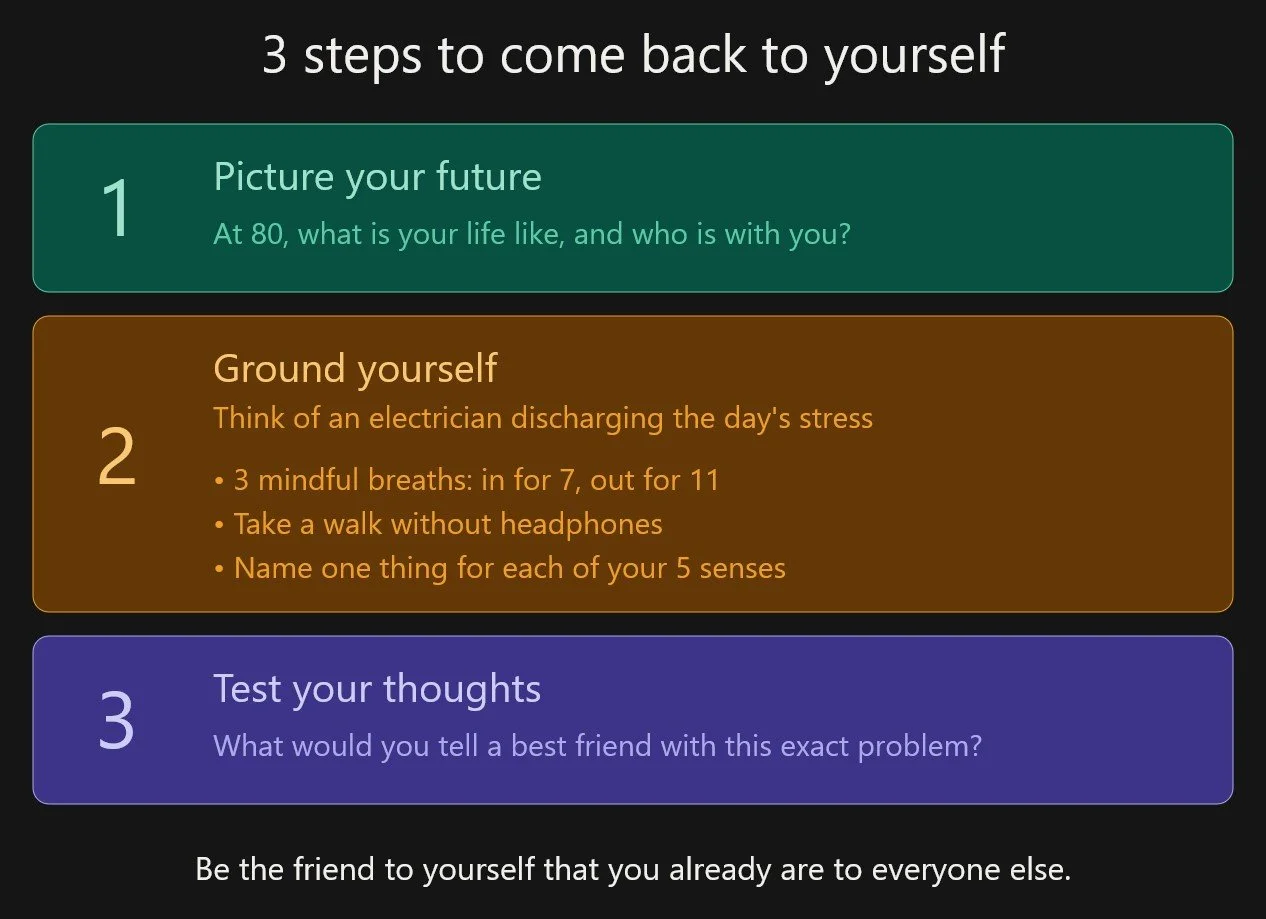
1. Take time to imagine you are 80 years old and still in good health with suitable financial situation. What do you image you would reasonable be doing with your time? Who would you be doing it with?
a. This is a value exercise to help you determine what truly matters to you.
b. Ask, how are my actions matching these things that matter the most to you.
2. Ground yourself like a electrician discharging the negative stress out of your body. This can be accomplished by following:
a. Take 3 mindful breaths like breathing for 7 seconds and our for 11 seconds and repeat three times.
3. Last, test your thoughts by using more compassion:
a. Ask yourself, if you best friend told you the same thing you are struggling with, what would they say? What would they do?
This is by no means an exhaustive list to help lower the hidden costs of emotional numbness and functional anxiety. Sometimes talking with a trusted friend/family, therapy or a support group is the most helpful option, offering a place to express yourself and learn new ways to address these costs without your mask to no longer feel so burdensome. It takes time, energy, and persistence. But when you understand your core reason, you can start to feel joy again.
I hope this article finds you well. I offer it for educational purposes, to help you find a new way forward, drawing on more than a decade of supporting people with a wide range of neurological experiences. These suggestions are made are simple and may be different for those of different identities and experiences. It cannot replace a good therapist, friend, or support group. My hope is that it helps you begin finding joy in the small moments again.
Want more tools for coming back to yourself? Visit youcandonow.com for more resources on anxiety, numbness, and finding joy again.
Kind regards,
Sean Becker, LCSW
Therapist, Coach, CEO